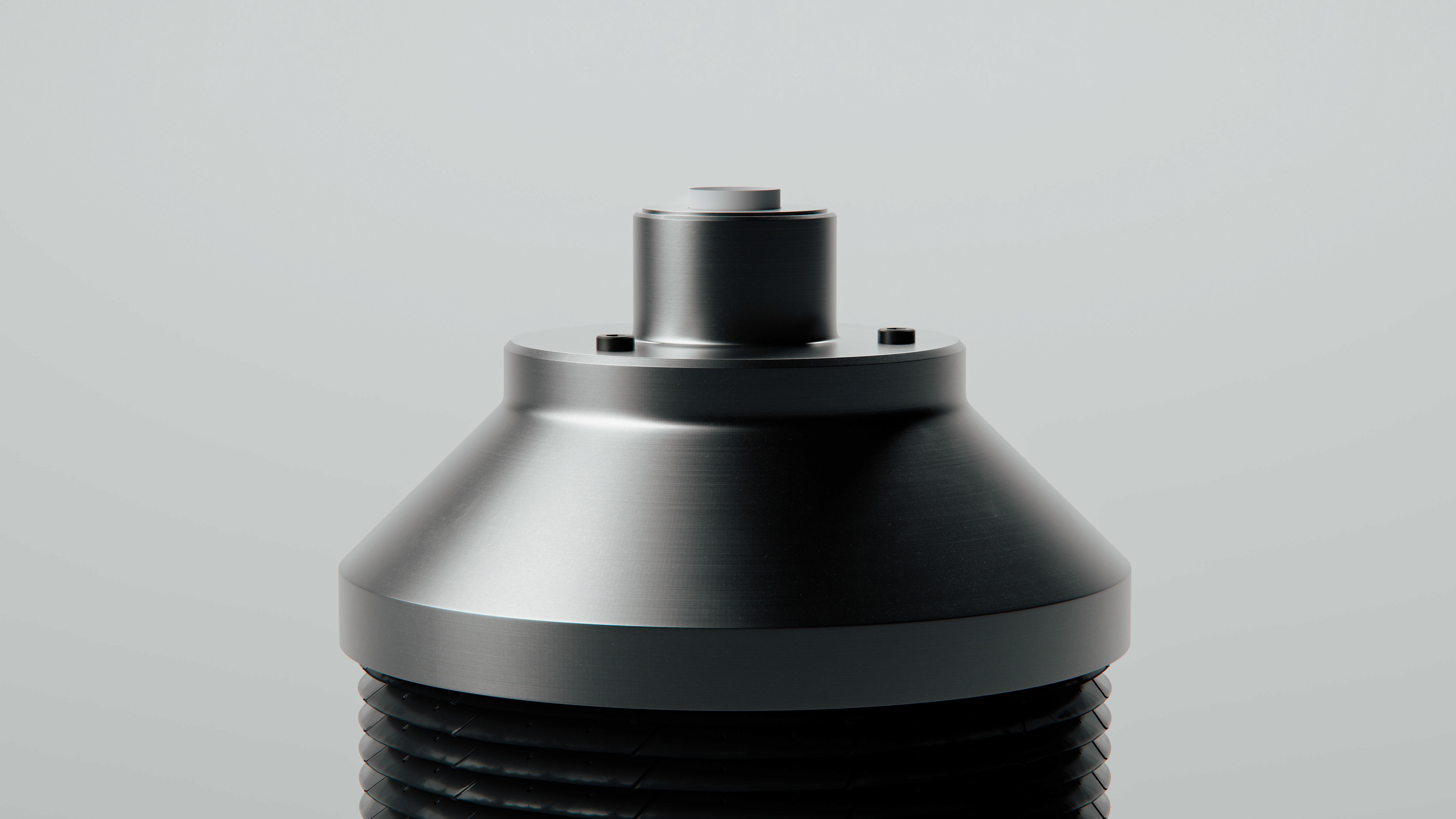
Cler's centrifugal separator was submitted for independent particle removal testing at the RISE Research Institutes of Sweden laboratory in Borås. The test was conducted following ISO 16890 and the results published in a signed report by RISE engineers Ingmar Schüßler and Tobias Eriksson.
About RISE Research Institutes of Sweden
RISE is Sweden's national research institute, operating across building physics, materials science, ventilation, and a broad range of technical disciplines. The institute conducts testing for industry, government, and public bodies and has no commercial relationship with Cler. The test results reflect laboratory measurements under documented conditions.
Test methodology: ISO 16890
ISO 16890 is the international standard for measuring particle removal performance in ventilation and air handling equipment. It defines how particles are introduced into the airstream, how measurements are taken upstream and downstream of the unit under test, and how efficiency figures are calculated and reported.
RISE introduced a known concentration of particles into the airstream at Cler's separator inlet. Particle counts were measured at 18 size intervals ranging from 0.1 to 3.0 micrometres, both before and after the separator. For reference, a human hair is approximately 70 micrometres wide. The particles being measured are between 20 and 700 times smaller than that.
Testing was conducted at two airflow rates: full load at 1,124 m³/h and part load at 506 m³/h.
Full load versus part load
Centrifugal separation efficiency is influenced by the time a particle spends inside the separator. At higher airflow, particles move through faster. At lower airflow, dwell time increases and separation efficiency improves across all particle sizes, which is reflected in the difference between the two sets of results.
Most ventilation systems operate at or below rated capacity for the majority of their service life. The part load figures therefore represent the conditions under which the separator runs most of the time.
Particle removal efficiency – the result
At part load, Cler's separator achieved 86% removal of PM1 particles and 90% removal of PM2.5 particles. At full load, the results were 69% and 79% respectively.
PM1 and PM2.5 refer to particles with a diameter smaller than 1 and 2.5 micrometres. Particles in this size range remain airborne for extended periods and travel through ductwork and into downstream equipment. They are the size categories referenced in air quality standards and building regulations.
For particles above 0.7 micrometres, removal exceeded 99% at part load and 96% at full load. Above 1.0 micrometre, removal was effectively complete under both test conditions.
Download the full report