Grease buildup in commercial kitchen ductwork is one of the most consistent fire risks in food service, and among the least visible. Unlike most hazards in a kitchen environment, it develops out of sight, between scheduled maintenance visits, and accumulates regardless of how well the cooking equipment itself is maintained.
Why mechanical grease filters allow grease to build up in kitchen ductwork
Mechanical grease filters at the canopy intercept the droplet fraction of kitchen exhaust. The fine aerosol fraction, particles smaller than a micron carried in vapour, passes through any baffle or cassette filter medium and continues into the ductwork downstream. This is not a maintenance failure. It is a physical limitation of mechanical filtration that no cleaning frequency or filter grade overcomes.
Once inside the ductwork, those particles deposit on interior surfaces. Grease accumulation is heaviest at bends, fan housings, and transitions where airflow changes direction. As deposits age they polymerise: bonding to the duct wall, becoming progressively harder to remove during cleaning, and developing a lower flash point than fresh grease. A commercial kitchen running continuous frying service is adding to that accumulation with every shift. The fire risk in the ductwork at the end of the quarter is meaningfully higher than it was at the start.
Commercial kitchen duct fires: how they start and why they spread
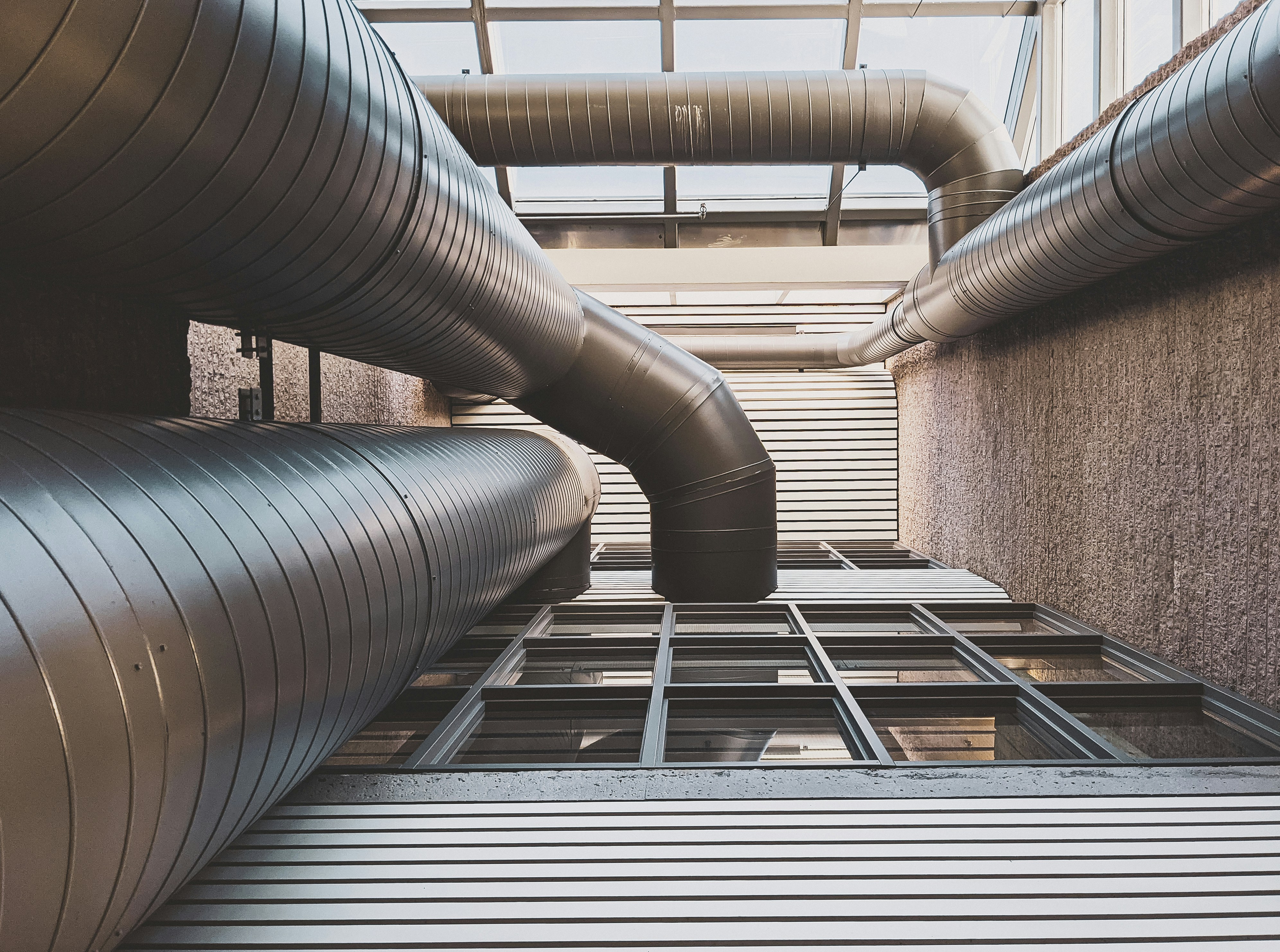
A grease fire that establishes inside commercial kitchen ductwork does not behave like a contained cooking fire. The duct system runs from the kitchen through the building structure, through wall penetrations, ceiling voids and potentially multiple floors, before reaching the exterior. It carries forced airflow throughout. Grease deposits line every interior surface along that route.
A fire inside the duct has fuel on every wall around it and a continuous air supply driving it forward. It moves through the building along a path that bypasses fire compartmentation, and can develop significantly before it is apparent in the kitchen below. This is why kitchen ventilation fire risk sits in a different category from most commercial building fire scenarios for insurers and fire authorities: the duct system itself becomes the mechanism by which the fire spreads.
Kitchen ventilation fire safety compliance in Sweden: what the law requires
Under Sweden's Civil Protection Act, the responsible person for a commercial premises is required to maintain documented systematic fire protection covering the ventilation system. For property owners leasing to restaurant operators, responsibility for kitchen ventilation needs to be explicitly assigned in the lease. Where it is not, the obligation defaults to the property owner.
Brandskyddsföreningen publishes cleaning interval guidelines calibrated to grease production by cooking category. Continuous frying, wood-fired and charcoal cooking fall into the shortest interval bracket. Operating outside those intervals is not simply a hygiene issue. It means maintaining a commercial kitchen ventilation system with a grease buildup that exceeds acceptable fire safety thresholds.
Swedish insurers require signed cleaning protocols and recorded grease deposition measurements from every maintenance visit. Following a kitchen ventilation fire, those documents determine whether a claim is paid. Incomplete records, whether a missed visit, an undocumented clean or the absence of deposition readings, are sufficient grounds for a claim to be refused. This is a routine outcome in kitchen fire cases, not an edge case.
Centrifugal grease separator vs mechanical filter: fire safety implications
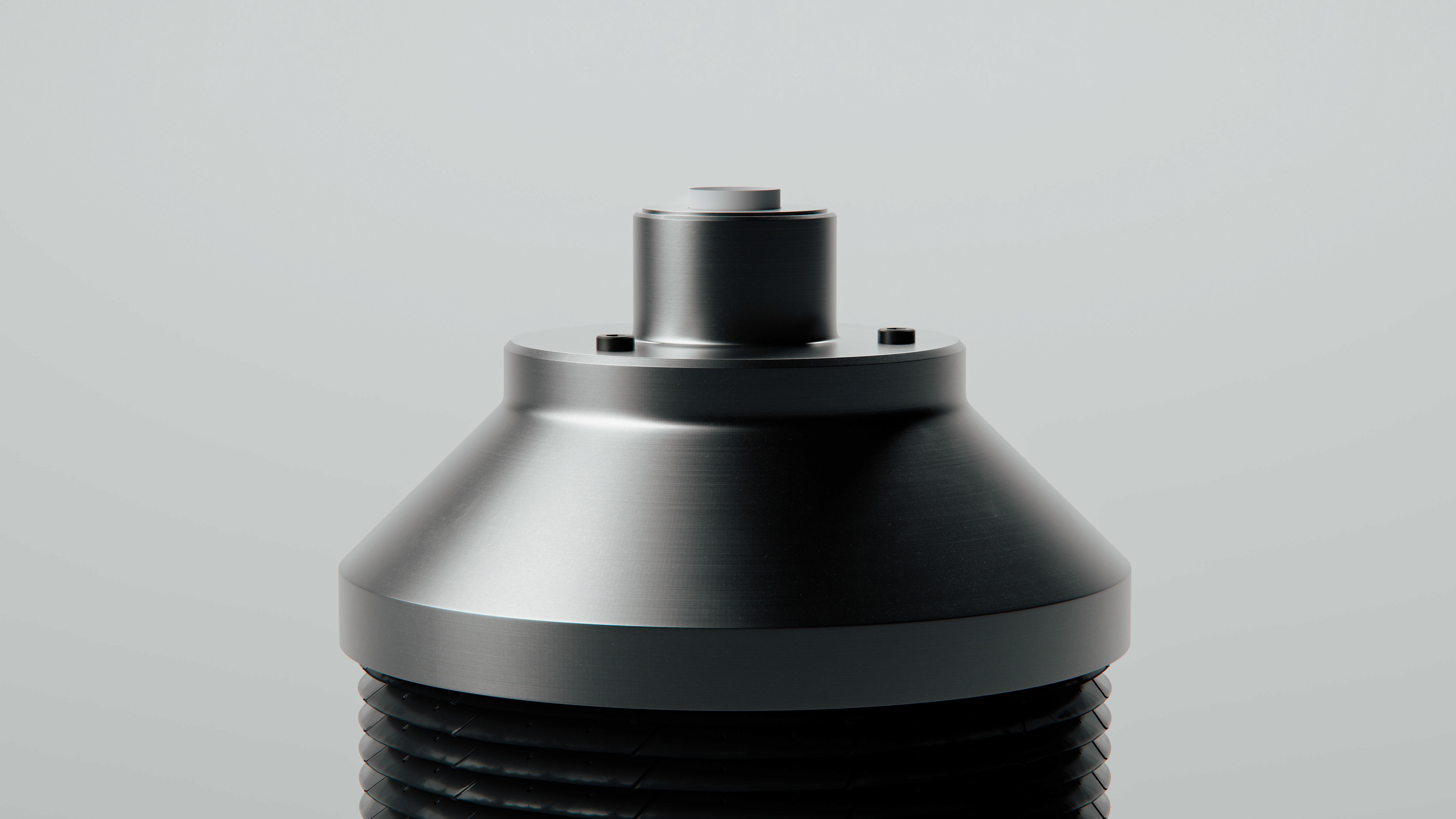
A centrifugal grease separator removes grease from commercial kitchen exhaust by centrifugal force before the air enters the ductwork. Unlike mechanical filtration, centrifugal separation acts across particle sizes, including the fine aerosol fraction that passes any mechanical filter medium. Grease separated from the airstream drains continuously to the kitchen's grease trap during operation.
The downstream effect on ductwork grease buildup is directly measurable. At McDonald's Gotland, a high-volume commercial kitchen operating continuous frying, duct inspection after twelve months with Cler's centrifugal separator recorded grease deposition levels the attending chimney sweep described as the lowest he had seen in an active kitchen.
How centrifugal separation affects cleaning intervals and compliance costs
Lower grease deposition in the ductwork reduces the fire risk that accumulates between maintenance visits. It does not remove the legal requirement to inspect. What it changes is the result of those inspections and, where deposition remains consistently below Brandskyddsföreningens thresholds, the frequency at which professional duct cleaning is required to maintain commercial kitchen fire safety compliance.
For a high-volume operation currently running quarterly cleaning, that has a direct effect on contractor costs, operational disruption, and the documentation burden the business carries each year.
Download the full report