Ventilation systems move air through commercial buildings, industrial facilities, food production environments, data centres, and air handling units of every type. In most of those environments, the air carries airborne contamination: grease particles, oil mist, fine dust, or process-specific particulates depending on the application. The technology used to remove those particles before they reach downstream ductwork determines maintenance requirements, system performance over time, and the long-term condition of the infrastructure.
The choice between a mechanical filter and a centrifugal separator is the central specification decision for particle removal in ventilation. The environments they operate in vary considerably. The comparison between the two technologies does not.
How mechanical filters capture airborne particles in ventilation systems
Mechanical filters are barrier technologies. Contaminated air passes through a physical medium and particles are captured by impaction, interception, or diffusion depending on particle size and filter design. The most common types are baffle filters, cassette filters, and mesh panels, often installed in combination as primary and secondary stages.
What they share is accumulation. The filter medium stores what it captures. Performance at installation is the highest performance the filter will deliver. From that point, every operating hour adds contamination to the filter surface, increasing airflow resistance and reducing extraction efficiency. In high-load environments, that degradation is measurable within days.
Mechanical filters also share a consistent technical limitation: the finest particle fraction passes through. Sub-micron particles carried in vapour or aerosol form are not reliably captured by any mechanical filter medium. In environments with significant contamination loads, this fraction is substantial. It continues downstream and deposits on duct surfaces, heat exchangers, fan blades, and other components regardless of how frequently the filter itself is serviced.
How centrifugal separation works in ventilation and air handling systems
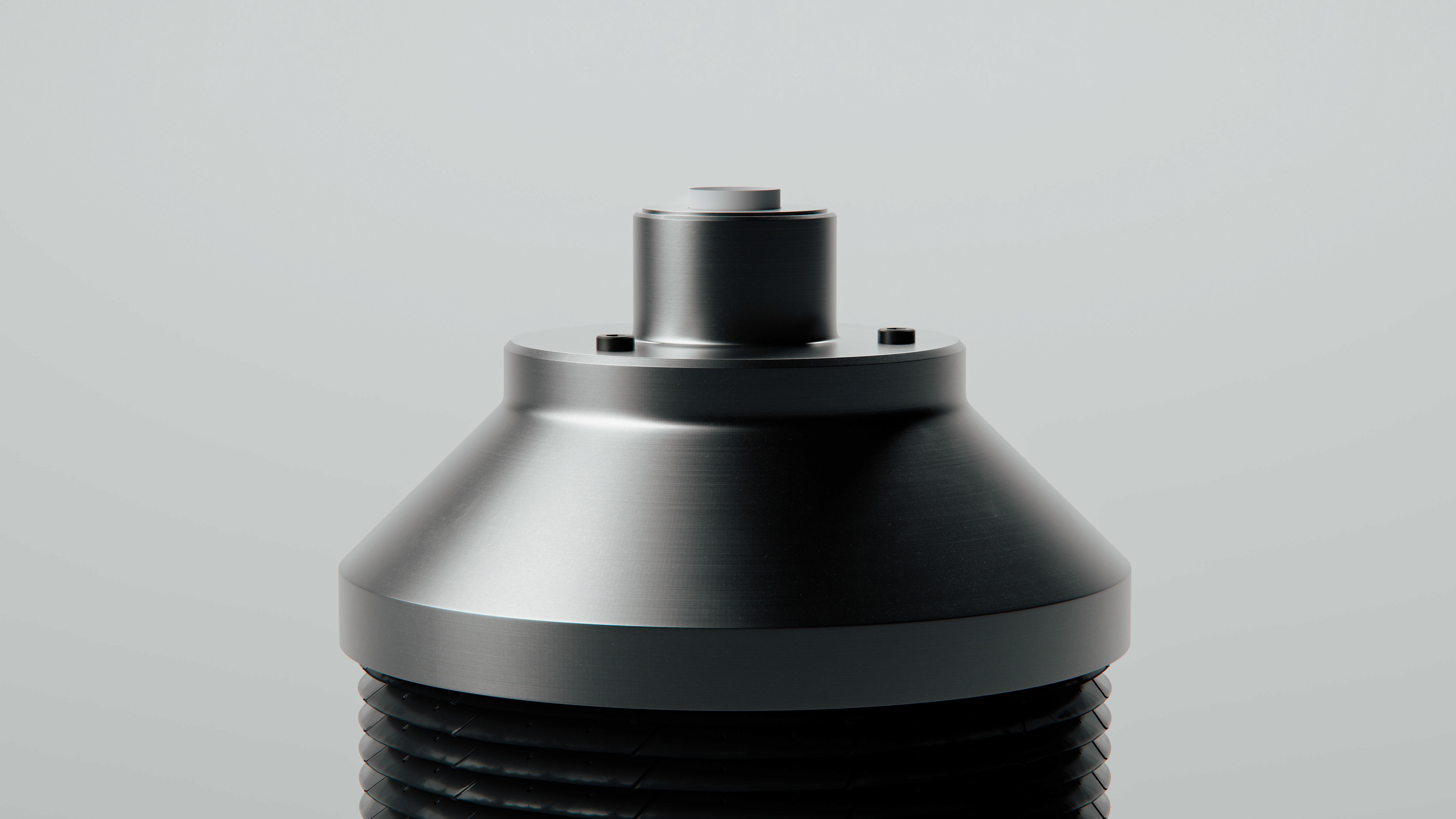
A centrifugal separator removes particles from the airstream by applying centrifugal force rather than physical interception. Contaminated air enters the separator and is accelerated to high rotational velocity. The centrifugal forces generated act on all particles in the airstream simultaneously. Particles, being denser than air, are driven outward, separated from the airflow continuously during operation, and drained or collected according to the nature of the contaminant and the application.
In Cler's system, centrifugal forces reach up to 5,000 g across a separation surface of 25,000 m². Separation efficiency is maintained across particle sizes, including the fine aerosol fraction that passes any mechanical filter medium.
Because separation occurs by physical force rather than accumulation in a medium, there is no filter surface loading over time. Automated self-cleaning cycles maintain the separation surface during operation. The system performs to the same specification in month twelve as it did at commissioning.
Filtration vs centrifugal separation: performance under continuous operating loads
The performance gap between a mechanical filter and a centrifugal separator widens with operating load and time. A mechanical filter in a high-contamination environment degrades faster, requires more frequent servicing, and passes more fine particles to downstream infrastructure than the same filter in a light-duty application. At sufficient load, a mechanical filter operating between service intervals is no longer performing to its rated specification.
Centrifugal separation is not affected by this dynamic. The separation force applied to incoming particles depends on rotational velocity, not on the condition of an accumulating medium. High contamination loads increase the volume of material separated and drained, but they do not reduce separation efficiency over time.
At McDonald's Gotland, a high-volume operation with continuous contaminated exhaust, duct inspection after twelve months with Cler's centrifugal separator recorded the lowest particle deposition levels the attending specialist had seen in an active installation of that type.
Mechanical filter vs centrifugal separator: maintenance costs over time
Mechanical filter maintenance is a function of contamination load. In light-duty applications, service intervals are long and costs are manageable. In continuous high-load environments, filter servicing becomes a frequent, operationally disruptive task. Beyond the filter itself, downstream ductwork and equipment accumulate fine particle deposits that require periodic professional cleaning regardless of how consistently the upstream filter is maintained.
In regulated environments, each professional cleaning visit also generates documentation requirements: deposition readings, signed protocols, and maintenance logs. That combination of contractor cost, access logistics, and compliance burden recurs for the life of the installation.
Centrifugal separators do not require filter media servicing. Self-cleaning runs during operation. Downstream infrastructure carries lower contamination loads, and where deposition remains below regulatory thresholds, professional cleaning intervals extend accordingly. The reduction in contractor visits and associated documentation has a direct effect on operational cost over time.
Choosing the right ventilation technology
For low-load or intermittent applications, mechanical filtration is a practical and cost-effective choice. Contamination levels are manageable, service intervals are reasonable, and the capital cost difference between the two technologies may not be recovered within a standard equipment lifecycle.
For continuous, high-load, or heavily regulated environments, the calculation shifts. The maintenance cost of mechanical filtration compounds with operating hours. The fine particle fraction that passes through any mechanical filter accumulates in downstream infrastructure across years of operation. The technology specified at the point of air entry determines the condition of everything downstream, the maintenance programme the facility carries, and the long-term performance of the ventilation system.
Download the full report